
A Guide from the Team at Distinctly Dental
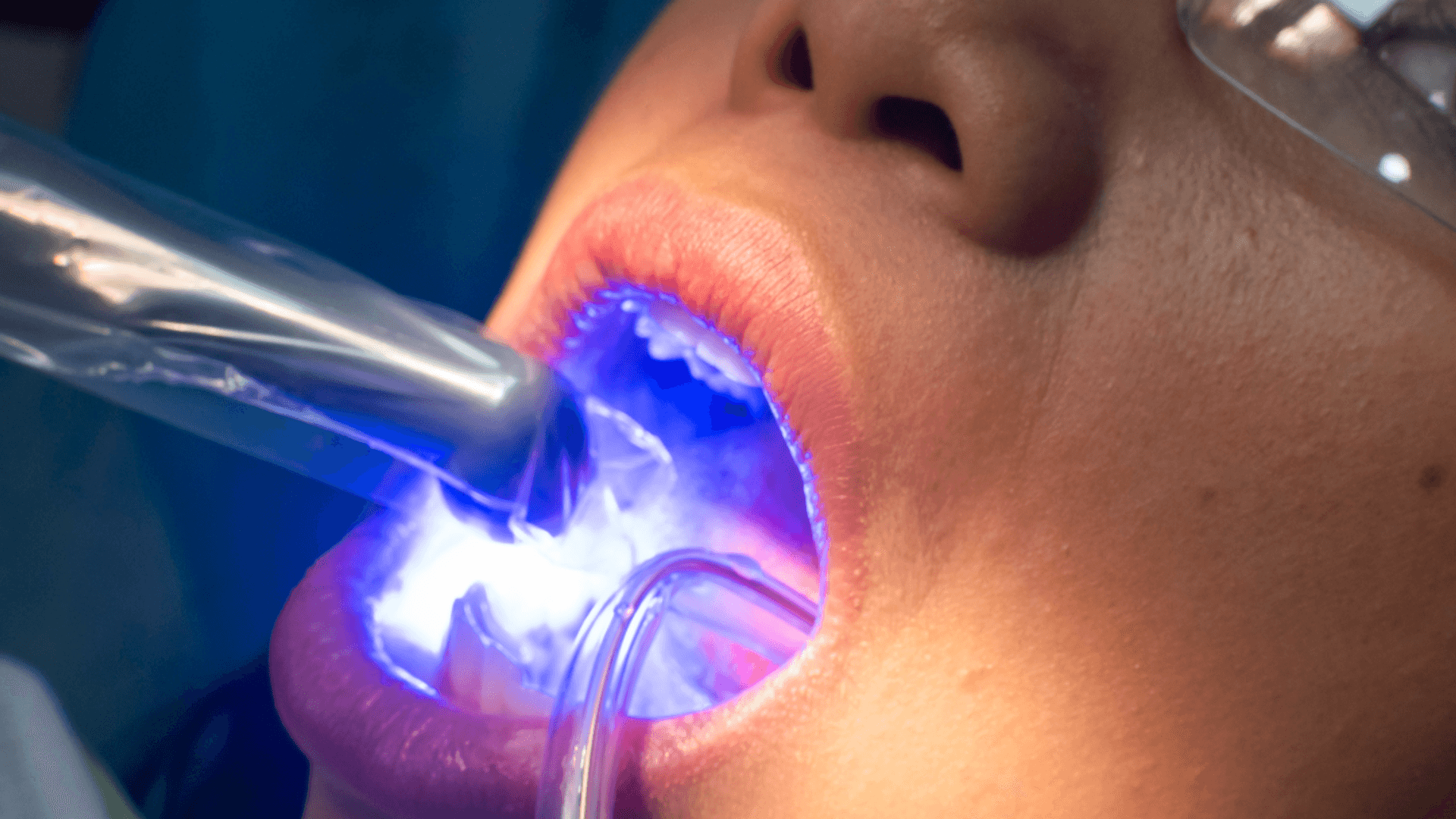
At Distinctly Dental, we love helping our patients feel confident in their smiles. One of the most popular and versatile cosmetic treatments we offer is composite bonding – a quick, affordable, and minimally invasive way to transform the appearance of your teeth. Whether you have chipped, discoloured, uneven or gapped teeth, composite bonding could be the solution you have been looking for.
In this guide, we will walk you through everything you need to know: what composite bonding is, who it is suitable for, how much it costs, the risks and benefits, and the alternative treatments available. We will also explain how a cosmetic consultation at our practice works, and why so many of our patients choose to combine bonding with teeth whitening or orthodontic treatment for truly stunning results.
What Is Composite Bonding?
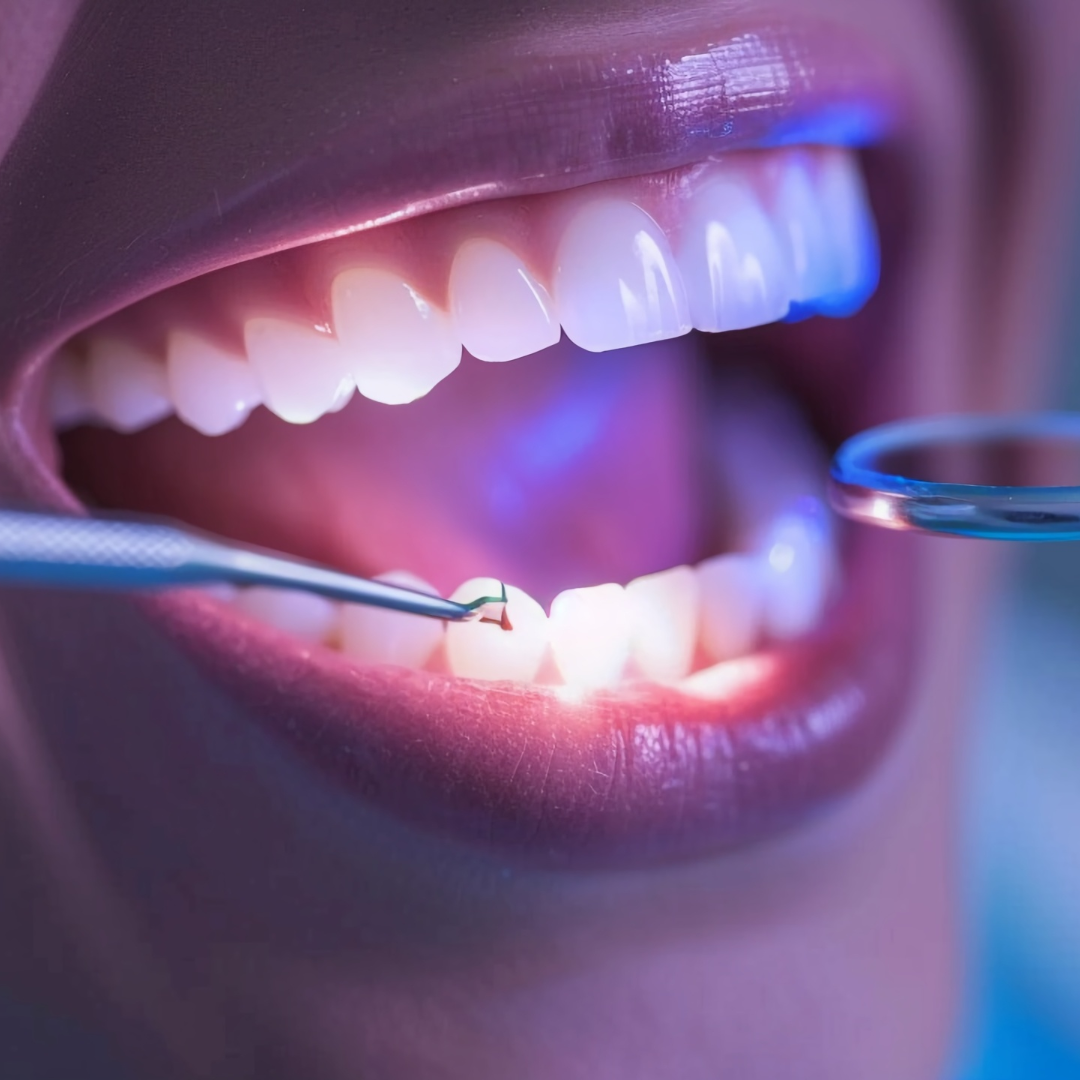
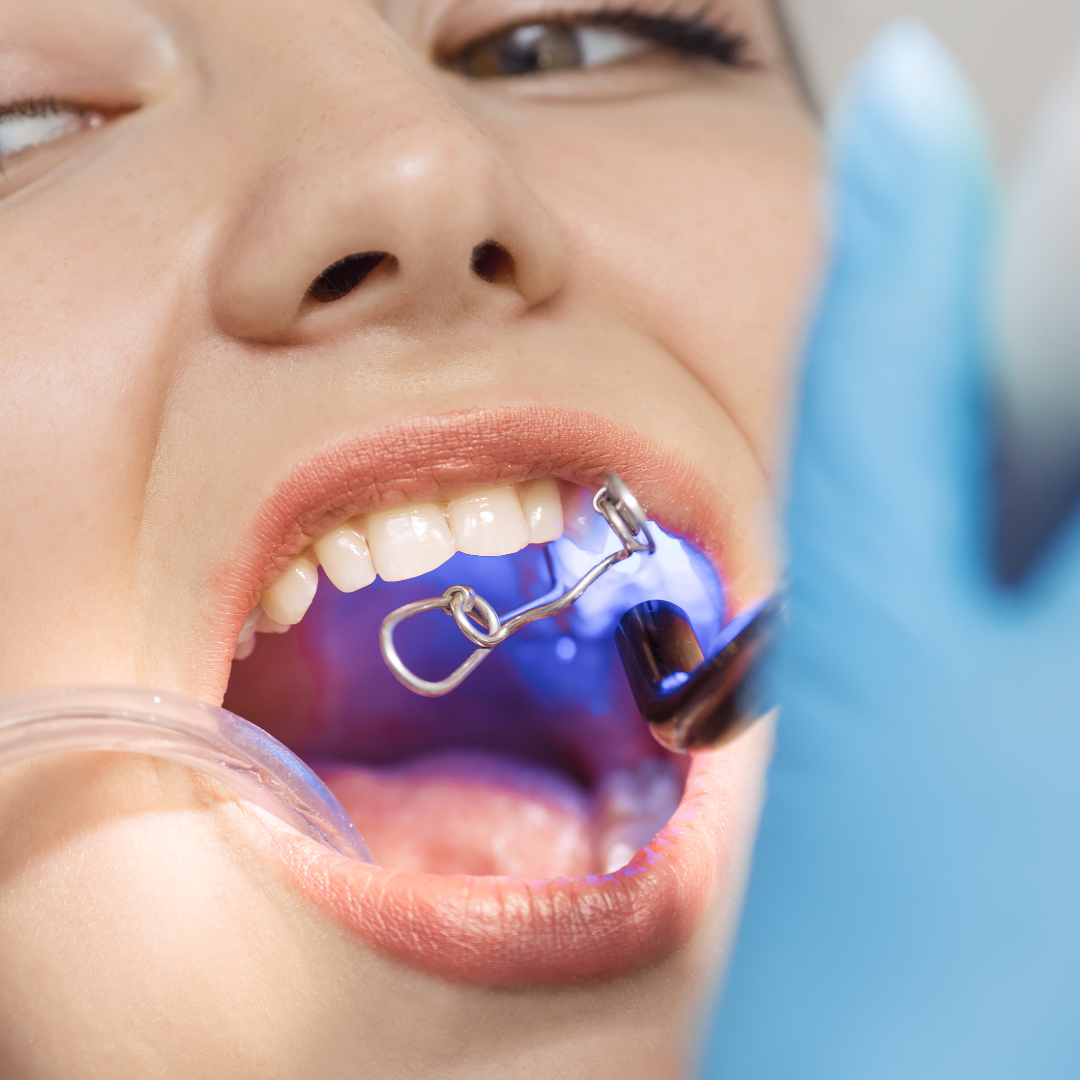
Composite bonding is a cosmetic dental procedure in which we apply a tooth-coloured resin material directly to the surface of your teeth. The composite is carefully sculpted and shaped by your dentist, then hardened with a special curing light and polished to a natural-looking finish. The entire process is typically completed in a single visit, with no or minimal drilling or anaesthetic required in most cases.
There are two main types of composite bonding:
- Edge bonding – where composite is applied only to the edges or tips of the teeth to repair chips or add length
- Composite veneers – where composite covers the entire front surface of a tooth, addressing shape, colour and alignment concerns more comprehensively
Who Is Composite Bonding Suitable For?
Composite bonding is one of the most versatile cosmetic treatments in dentistry. It may be a good option for you if you have one or more of the following:
- Chipped or cracked teeth
- Worn or shortened teeth (often due to grinding)
- Gaps or spaces between teeth
- Slightly misaligned or uneven teeth
- Discolouration or staining that does not respond to whitening
- Teeth that are smaller than ideal (peg-shaped laterals, for example)
- Exposed root surfaces causing sensitivity
Composite bonding works best when the underlying teeth are healthy. If there are any issues such as decay, gum disease or significant structural damage, these will need to be addressed before any cosmetic treatment is carried out.
How Much Does Composite Bonding Cost?
We believe great smiles should be accessible. Our composite bonding pricing is as follows:
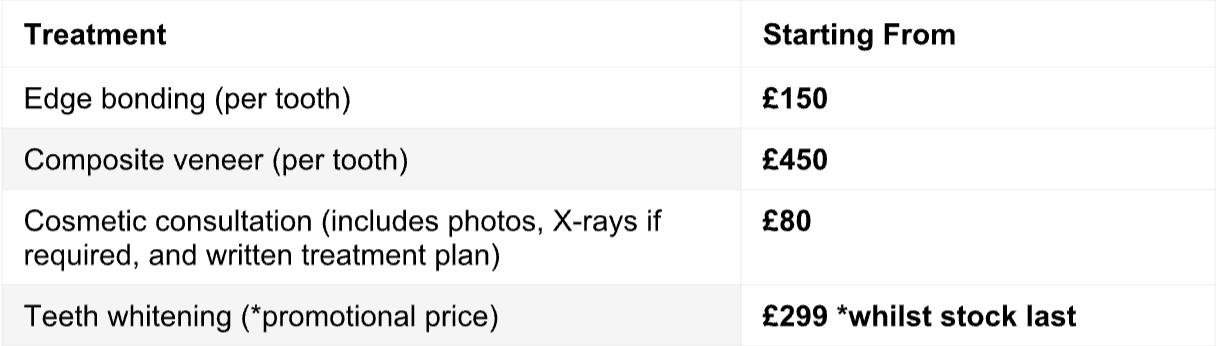
The total cost of your treatment will depend on how many teeth are involved and the complexity of the work required. This will all discussed and confirmed at your consultation, so there are never any surprises.
The Benefits of Composite Bonding
- Immediate results – your smile is often transformed in a single appointment
- Minimally invasive – in many cases, no drilling or removal of tooth structure is needed
- No anaesthetic required in the majority of cases
- Reversible – because little or no enamel is removed, the treatment can be adjusted or removed in the future
- Natural-looking – the composite is carefully shade-matched to blend seamlessly with your surrounding teeth
- Versatile – can address a wide range of cosmetic concerns simultaneously
- Cost-effective compared to porcelain alternatives
- Repairable – if the bonding chips or wears, it can usually be repaired straightforwardly
The Risks and Limitations to Be Aware Of
Composite bonding is a very safe procedure, but as with any treatment, there are some limitations and risks that are important to understand before proceeding.
- Durability – composite is not as hard or as stain-resistant as natural enamel or porcelain. With good care it can last many years, but it may need polishing, repair or replacement over time
- Staining – over time composite can pick up staining from tea, coffee, red wine and smoking
- Chipping – composite can chip if subjected to excessive force, such as biting nails, chewing hard foods, or grinding teeth
- Whitening – areas of composite bonding will not respond to teeth whitening treatments. This is one of the most important things to factor in when planning your treatment (see below)
- Sensitivity – some patients experience temporary sensitivity following treatment, though this usually settles quickly
- Shade matching – whilst we take great care to match the composite precisely, very slight variations in appearance compared to natural teeth can occasionally occur over time
Important Note About Teeth Whitening
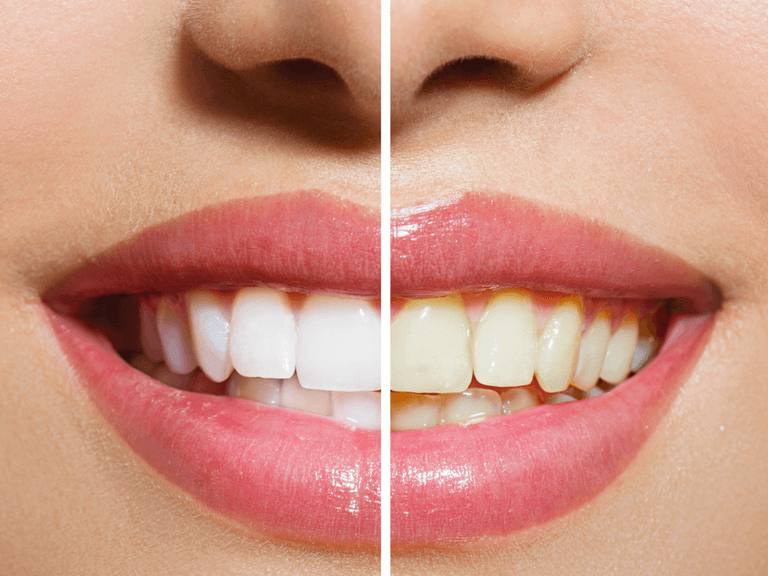
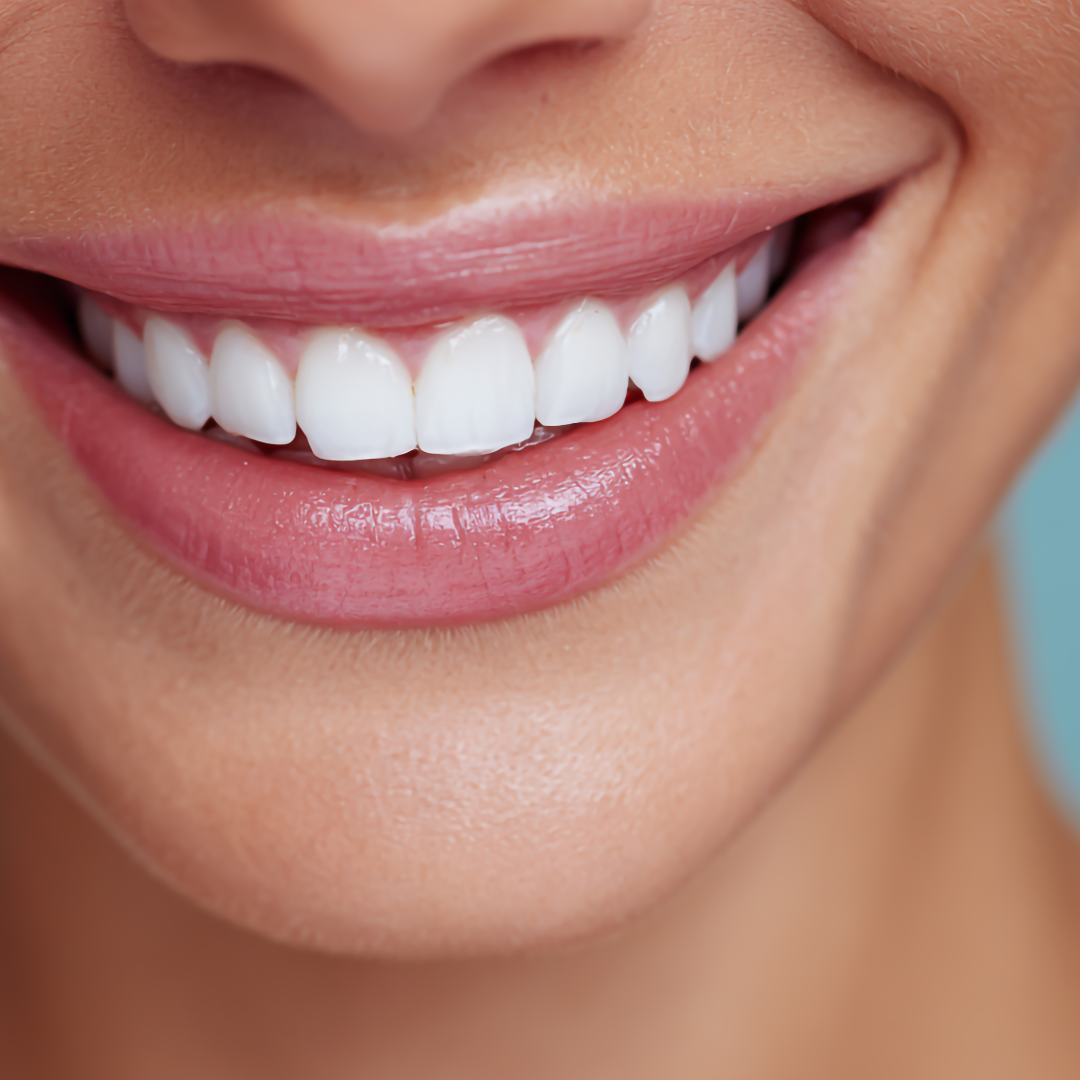
Composite resin does not respond to whitening agents. This means that if you have composite bonding placed and then whiten your teeth afterwards, your natural teeth will brighten but the bonded areas will stay the same shade – and may end up looking mismatched. For this reason, we strongly recommend whitening your teeth first, allowing the shade to fully stabilise (usually a few weeks), and then having your composite bonding matched to your new, brighter smile. This gives you the best long-term result. We currently offer teeth whitening at a promotional price of *£299 (*whilst stock last) – a great opportunity to brighten your smile before your bonding treatment. We provide professional take-home whitening kits that are safe, effective and made to measure to your teeth.
Alternative Treatments to Consider
Porcelain Veneers
Porcelain veneers are thin shells of ceramic that are bonded to the front surface of your teeth. They tend to be more durable, more stain-resistant and longer lasting than composite, and can produce an exceptionally natural result. However, they require some removal of enamel to place correctly, are not reversible, and come at a higher cost. They also typically require two or more appointments. Porcelain veneers are an excellent option for patients looking for a more permanent solution, particularly where significant colour or shape changes are needed, and those who want the closest match to natural teeth.
Crowns
A crown covers the entire tooth rather than just the front surface. Crowns are generally recommended where a tooth has more significant structural damage, large existing restorations, or has been root treated. They involve more preparation of the tooth and are a more involved procedure, but provide excellent strength and longevity. For purely cosmetic concerns on otherwise sound teeth, composite bonding or porcelain veneers are usually more appropriate – but your dentist will advise you on the best option for your individual situation.
Orthodontic Treatment
If misalignment or spacing is your primary concern, orthodontic treatment – such as clear aligners or traditional braces – may address the root cause rather than masking it. Straightening your teeth can sometimes reduce or eliminate the need for bonding altogether, or may result in less bonding being required. At Distinctly Dental, we offer orthodontic options and would be happy to discuss these as part of your treatment planning. Like whitening, we would usually recommend completing orthodontic treatment before composite bonding.
Ready to Get Started? Book a Cosmetic Consultation
If you are thinking about composite bonding – or simply want to explore what is possible for your smile – the best first step is to book a cosmetic consultation with us here at Distinctly Dental.
Our cosmetic consultation is £80 and includes:
- An assessment of the area that you are interested in changing
- X-rays where clinically needed
- A personalised written treatment plan with a full cost estimate
- A relaxed discussion of all your options, so you can make an informed decision with no pressure
We will take the time to understand exactly what you would like to achieve, and we will design a treatment plan around your goals, your budget and your timeline. Many of our patients find it helpful to have everything mapped out before committing to any treatment – and we think that is exactly the right approach.
For further advice visit British Dental Association.
To book your cosmetic consultation, contact us today.
We look forward to welcoming you to Distinctly Dental. Click HERE to go to our contact page.